TL;DR:
There is no single number for how far a German Shepherd can smell a person or object. Their scent range depends on many factors, such as the wind, humidity, terrain, the type of scent, and the dog’s training and focus. German Shepherds are built for scent work, which is why they excel in tracking and detection roles. Their real strength is not only distance, but their ability to follow scent over time and stay locked in despite distractions.
German Shepherds are known for their strong working ability, and their sense of smell plays a major role in that reputation. Many owners eventually wonder, how far can a German Shepherd smell a person or object?
There is no fixed distance. Scent detection depends on conditions like wind, terrain, and the type of scent involved. To understand the range, it helps to first know how scent works and how German Shepherds use their noses in real situations.
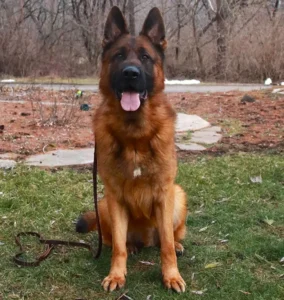 Why German Shepherds Have Such Powerful Noses?
German Shepherds were developed as working dogs, which is one reason they are often used in tracking and detection roles. The breed was built for focus, endurance, and the ability to stay steady while completing a task.
Their noses are highly sensitive, and they can pick up scent particles both in the air and on the ground. Just as important, many German Shepherds stay engaged once they find a scent trail. That focus is what helps them follow a person or object instead of getting pulled away by every distraction around them.
How Far Can A German Shepherd Smell In Real Life?
There is no fixed distance for how far a German Shepherd can smell. Scent does not travel in a straight line or stay consistent from one situation to the next. Conditions in the environment make a significant difference.
Under ideal wind conditions, a trained German Shepherd may detect airborne scent from several hundred yards away. In rare cases and optimal environments, working dogs have been known to pick up scent from over a mile away. In other situations, however, the same scent may be much harder to detect.
Factors like wind direction, temperature, terrain, humidity, and the strength of the scent all play a role. It also helps to clarify what “smell” means. A dog may detect scent carried through the air, or it may follow scent left on the ground. Those are two different scent behaviors, and they respond differently to changing conditions.
Instead of focusing on an exact number, it is more accurate to understand that the scent range varies. What matters most is not just how far a dog can detect scent, but how effectively it can continue working once it finds it.
What Affects A German Shepherd’s Scent Range
Scent ability is not just about the dog, but also the conditions they are working in. Small environmental changes can make scent easier to detect or much harder.
Wind, Weather, & Humidity
Weather quietly changes how scent behaves. A light breeze can carry scent farther and make it easier for a German Shepherd to notice. Strong wind, however, can push scent around and make it harder for the dog to pinpoint exactly where it is coming from.
Moisture in the air also matters. Slightly damp conditions often help scent settle and linger, while dry heat can cause it to fade more quickly. Because of this, the same location can feel very different to a dog depending on the day.
Terrain, Surface, & Environment
Where the dog is working changes how scent settles and stays. Grass, soil, and wooded areas tend to hold scent longer, while hard surfaces like pavement or dry sand allow it to fade more quickly. Open spaces also leave scent more exposed to wind, while enclosed areas may let it linger.
Busy environments add another layer. Sidewalks, streets, and public areas carry overlapping scents from people, animals, food, and vehicles. In those settings, the challenge is not whether scent exists, but whether the dog can stay focused on the one it is meant to follow.
What They Are Smelling (Person, Object, Food)
The type of scent matters. A moving person usually leaves a stronger scent picture than someone standing still. Sweat, skin cells, and movement all affect how much scent is released and how easily it spreads through the air or settles onto the ground.
Objects vary as well. A piece of fabric that has been handled often will usually carry more scent than a clean object. Food tends to be easy for dogs to detect because the odor is strong, but it can also blend into everyday smells. Wildlife scent is another factor, since many German Shepherds react to animal scent even when nothing is visible.
A German Shepherd’s Training
Scent ability is not only about the nose. A dog without training may detect a scent and show interest, but it may not stay engaged long enough to follow it with purpose. It might sniff briefly, get distracted, and move on. Training helps a dog stay focused and work through competing smells.
A GSD’s drive matters too. Some German Shepherds naturally enjoy scent work and stay committed, while others need more structure to remain engaged. The combination of training and focus often determines how effective the dog is in real situations.
How German Shepherds Actually Follow A Scent Trail
German Shepherds do not follow scent in one single way. Depending on what they are trying to find and what the environment is like, they may work scent through the air or stay focused on what was left behind on the ground.
Air Scenting VS Ground Tracking
German Shepherds typically work scent in two main ways. Sometimes they detect scent carried through the air, and other times they follow scent left behind on the ground. Both are normal and useful, depending on the situation.
| Scent Style | What It Looks Like | What It Is Best For |
| Air Scenting | Head up, sniffing the air, scanning. | Detecting scent carried by wind or locating a general area. |
| Ground Tracking | Nose down, steady movement, checking the trail. | Following the path a person or object traveled over time. |
Scent does not travel in a straight line, and dogs do not follow it in just one way. Whether your German Shepherd is lifting their head to catch something in the wind or working with their nose close to the ground, both behaviors are part of how they process the world around them.
Why Can Dogs Follow Older Trails?
Scent does not disappear immediately. It fades and changes, but it can still remain on the ground and in the environment longer than most people expect. Weather, time, and surface type all affect how long that scent stays usable.
How Trails Get Lost?
Distractions can break a trail quickly. Wildlife, food smells, other dogs, and heavy human traffic can all interfere. That is why training matters. A trained dog learns to stay with the target scent instead of switching to something more interesting.
In the end, distance is not the full story. A German Shepherd may detect scent from far away but struggle to follow it cleanly. Another dog may pick it up closer, but track it more consistently once it does.
How To Build Your German Shepherd’s Scent Skills At Home?
Scent work is a simple way to give your German Shepherd mental exercise. It provides structure, taps into their natural instinct, and does not require special equipment to begin. Here are some things you can do.
- Start by hiding treats in easy, visible places.
- Let your dog watch at first, then gradually increase the difficulty.
- Hide a favorite toy and encourage your dog to search for it.
- Use a clear cue like “find it” so the task feels intentional.
- Keep sessions short and positive to maintain focus.
- Keep the routine structured rather than chaotic.
When scent work stays calm and consistent, it strengthens focus and gives your dog a productive outlet for their natural drive.
Raising German Shepherds With Strong Working Foundations
Strong working ability does not happen by chance. It comes from careful breeding, steady early development, and selecting for clear temperament and trainability. That foundation shapes how a dog thinks, learns, and applies its natural instincts, including scent ability.
Mittelwest German Shepherds in Wonder Lake, IL, breed with those principles in mind. Puppies are raised with structure, early guidance, and an emphasis on balanced working traits that support focus and reliability as they mature. If you are looking for a German Shepherd with this kind of foundation, contact Mittelwest German Shepherds to learn more about current and upcoming litters.

Julie Martinez is a German Shepherd breeder and the owner of Mittelwest German Shepherds in Wonder Lake, Illinois. She breeds German Shepherd Dogs under the “vom Mittelwest” kennel name and is listed as a breeder on the AKC Marketplace. Through her breeding program, Julie focuses on German-bred bloodlines and works with owners who value structure, temperament, and real-world working ability. She is also involved in local working-dog training through the Wonder Lake Schutzhund Club, where Mittelwest supports hands-on development such as tracking and club training.