TL;DR:
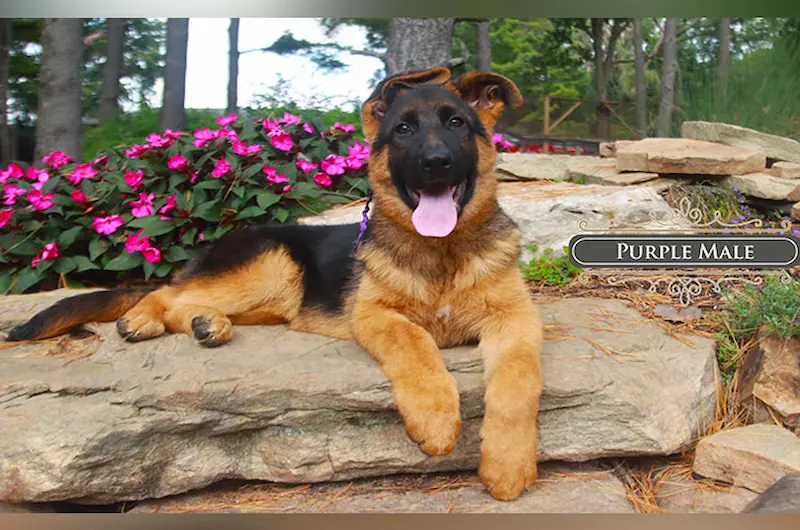
If you just brought home a German Shepherd puppy, you’re probably checking those soft, floppy ears every morning, wondering if today is the day they finally stand tall. It’s one of the most common questions new GSD owners ask, and for good reason. Those signature upright ears are part of what makes the breed so recognizable.
But here’s what most people don’t realize: even puppies born to two purebred parents with flawless ear carriage can spend weeks or months with floppy, lopsided, or wobbly ears before everything settles into place. It doesn’t mean anything is wrong with your dog. It means your puppy is still growing.
Let’s walk through the full timeline, what’s happening inside that cartilage, and the specific moments when you should, or shouldn’t, start worrying.
What The AKC Breed Standard Requires & What It Doesn’t Tell You
According to the AKC breed standard, German Shepherds should carry moderately pointed ears that are proportionate to the skull, open toward the front, and erect when at attention. Hanging ears are a disqualification in the conformation ring, a detail that understandably makes first-time owners anxious when their four-month-old puppy’s ears are still flat.
But the standard describes the finished adult dog. It says nothing about the chaotic developmental stage every GSD puppy goes through on the way to those iconic ears. A puppy with floppy ears at four months old is not a faulty dog. It’s a dog whose cartilage hasn’t finished hardening yet, and that process follows its own schedule.
The Month-By-Month Ear Timeline From Birth Through 8 Months Old
Most German Shepherd puppies begin showing signs of ear lift between 8 weeks and 6 months. Where your puppy falls within that window depends on genetics, nutrition, overall health, and individual development speed. Here’s what each stage typically looks like.
Newborn To 8 Weeks: All Ears Are Floppy & That’s Perfectly Normal
At birth, every German Shepherd puppy has completely soft, folded ears. The cartilage is undeveloped and nowhere near strong enough to support those oversized ear flaps. During this phase, the puppy’s body is directing all of its energy toward weight gain, immune system development, and basic motor skills. Ears aren’t even on the agenda yet.
8 To 16 Weeks: First Twitches, Brief Lifts & Real Progress Begins
This is where things get exciting. You might catch one ear lifting slightly when your puppy hears a noise, or both ears perking up for a second before flopping right back down. The cartilage is starting to strengthen, but it can’t hold those large ears consistently. Brief lift-and-flop cycles are completely typical at this stage.
16 Weeks To 5 Months: Teething Takes Over & Ears Get Unpredictable
Here’s where most owners start panicking, and they shouldn’t. As adult teeth push through, the body redirects calcium and nutrients toward jaw and tooth development, temporarily weakening ear cartilage. Ears that were starting to stand may suddenly droop again.
During this phase it’s extremely common to see one ear up and the other down, both ears meeting in the middle like a tent, or ears that change position three times before lunch. This back-and-forth isn’t regression. It’s biology working exactly as intended.
5 To 6 Months: Teething Winds Down & Cartilage Finally Hardens
By now, most of the adult teeth are in and the cartilage is finally getting uninterrupted access to the nutrients it needs. Many puppies will have both ears standing firmly by the end of this window. If you’ve seen the ears go up on their own, even briefly, even just when your puppy barks, that’s a strong sign they’ll reach full erect posture without help.
6 To 8 Months: The Final Window Before The Cartilage Sets Permanently
If the ears are fully up by six months, they’re almost certainly staying. The cartilage has reached adult-level firmness. For puppies still showing inconsistency at this point, the window for natural correction is narrowing but not yet closed. Most veterinarians and experienced breeders consider the eight-month mark the practical cutoff for ears to stand without intervention.
Your Puppy Is Past 6 Months & The Ears Are Still Down. Now What?
If your GSD is past six months with no signs of lift, it’s worth digging into the possible causes. Floppy ears in a purebred German Shepherd are almost always cosmetic rather than medical, but understanding the root factor helps you decide whether to act, and how.
Genetics Are The Biggest Factor Behind Soft Or Delayed Ear Cartilage
This is where it starts and, in many cases, where it ends. If there are floppy ears anywhere in the puppy’s lineage (parents, grandparents, littermates) the odds increase that puppy ear development will be slower or incomplete. Cartilage thickness, ear size relative to head, and overall skull structure are all inherited. A well-bred German Shepherd from parents with a strong, correct ear set has a significant head start, literally.
Poor Nutrition During The Growth Window Can Stall Ear Development
A high-quality large-breed puppy formula with the right balance of protein, calcium, and phosphorus is non-negotiable for healthy cartilage. Cheap food with filler ingredients can quietly undermine the entire process. That said, the opposite extreme is just as dangerous: loading a puppy with calcium supplements without veterinary guidance can cause skeletal problems far more serious than a floppy ear. If you suspect a nutritional gap, talk to your vet before adding anything to the diet.
Rough Play & Ear Injuries Can Cause Permanent Cartilage Damage
German Shepherd puppies have fragile ear cartilage during the first six to eight months. Another dog biting the ear during play, a child tugging on it, or even the puppy’s own aggressive scratching from an ear infection can permanently deform the cartilage before it has a chance to set. Monitor playtime closely, and make sure everyone in the household knows the ears are off-limits.
Ear Infections & Parasites Quietly Steal Resources From Development
Chronic ear infections, intestinal worms, or other parasitic loads force the body to divert resources toward fighting the problem instead of building cartilage. Keeping your puppy on a regular deworming schedule and watching for signs of ear discomfort (head shaking, scratching, odor) keeps development on track.
Taping, Chew Toys & Diet Tweaks: What Actually Moves The Needle
There are things you can do to support ear development, but the line between helpful and harmful is thinner than most online forums suggest.
Why Chew Toys Do More For Ear Strength Than Most People Realize
Chewing strengthens the temporalis muscle, which anchors at the base of the ear and plays a direct role in holding it upright. Providing safe, durable chew toys during the teething phase is one of the simplest and most effective interventions available. It’s also good for teething pain, mental stimulation, and redirecting destructive chewing, so there’s no downside.
What Your Puppy’s Diet Needs To Include For Strong Cartilage & Bone
Stick with a veterinarian-approved large-breed puppy food. If you want to add natural cartilage support, glucosamine-rich options like bone broth, chicken feet, or duck feet can complement a balanced diet. But supplements, especially calcium, should never be added without your vet’s sign-off. The risk of over-supplementation in a growing large-breed puppy is real, and the consequences go well beyond the ears.
Ear Taping After 5 Months: When It Helps & Who Should Do It
For puppies past the five-month mark whose ears aren’t progressing, some breeders and veterinarians recommend taping or soft splinting with medical-grade materials. The goal is to hold the ear upright while the cartilage finishes hardening, essentially giving it a scaffold.
Taping done correctly, under the guidance of an experienced breeder or veterinarian, can make a meaningful difference. Taping done incorrectly, with the wrong adhesive, too much pressure, or left on too long, can cause skin irritation, restricted blood flow, infection, or permanent damage. If taping is on the table, get hands-on guidance from someone who has done it successfully many times before.
Why One Ear Standing Before The Other Is Normal In GSD Puppies
This is probably the single most common scenario that sends new owners into a spiral. One ear standing tall while the other flops sideways looks alarming, but it’s an entirely predictable part of the process. Ear cartilage doesn’t develop at identical rates on both sides. During teething especially, asymmetrical posture is the rule, not the exception.
If both ears have shown signs of independent lifting at any point, even briefly, even during a bark, the slower ear will almost certainly catch up once teething ends and the cartilage has time to fully set.
How Teething Hijacks Your Puppy’s Ear Development For Weeks At A Time
The connection between teething and floppy ears catches most first-time GSD owners completely off guard. Between roughly three and five months of age, the body prioritizes calcium and nutrient delivery to the jaw for adult tooth formation. That temporary shift means less building material for the ear cartilage that’s still trying to harden.
This is why you’ll see ears standing strong at breakfast and completely flat by dinner. It’s not a setback. It’s the body triaging its resources in exactly the right order. Once the adult teeth are fully in and the jaw is done competing for nutrients, the cartilage gets the full supply it needs to finish setting.
GSD Mixes & Ear Development: Why The Other Breed’s Genes Matter
If your dog is a German Shepherd mix, the ear timeline becomes much less predictable. The genetic contribution from the other breed can affect cartilage density, ear size, ear placement on the skull, and overall head proportion. Some mixes develop fully erect ears. Others develop semi-erect or permanently floppy ears. Neither outcome signals a health problem. It simply reflects which set of genes expressed themselves most strongly.
Floppy Ears Don’t Affect Your Dog’s Health, Hearing, Or Temperament
Let’s be direct: unless you plan to show your dog in AKC conformation events, where hanging ears result in disqualification, floppy ears are a cosmetic characteristic, not a medical condition. Your dog’s hearing, intelligence, trainability, loyalty, and working drive are completely unaffected by ear posture. A German Shepherd with one floppy ear is every bit as capable and devoted as one with textbook carriage.
Frequently Asked Questions About German Shepherd Ear Development
When Do German Shepherd Ears Stand Up?
Most GSD ears begin standing between 8 weeks and 6 months. Consistent, permanent erect posture is typically achieved by 6 to 8 months.
Is It Normal For One Ear To Stand Up Before The Other One Does?
Yes. Asymmetrical ear development is extremely common during the teething phase and usually resolves on its own.
Should I Tape My German Shepherd Puppy’s Ears To Help Them Stand?
Only if recommended by your vet or breeder, and only after the teething phase has ended with no improvement. Never attempt taping without hands-on professional guidance.
Can Floppy Ears Be A Sign Of A Health Problem In German Shepherds?
Rarely. In the vast majority of cases, it’s cosmetic. However, persistent floppiness paired with other symptoms (lethargy, ear discharge, poor appetite) warrants a veterinary evaluation.
Will Giving My Puppy Calcium Supplements Make The Ears Stand Up Faster?
Not necessarily, and unsupervised calcium supplementation in a growing large-breed puppy can cause serious skeletal problems. A balanced, high-quality puppy diet provides everything the cartilage needs.
Healthy Ears Start With Strong Genetics & Responsible Breeding
Ear development, like every other aspect of your German Shepherd’s growth, is shaped by the genetic foundation a puppy is born with. Dogs bred from parents with proven structure, correct ear placement, and documented health histories are far more likely to develop naturally upright ears without intervention.
At Mittelwest German Shepherds, every pairing is selected for structural integrity, balanced temperament, and breed-standard conformation, including proper ear set. Our puppies come from world-class German bloodlines, raised with the nutrition, socialization, and veterinary oversight that support healthy development from the very first week.
If you’re looking for a puppy with the kind of foundation that sets them up for a lifetime of correct structure and robust health, explore our available litters or reach out to our team to learn about upcoming breedings.

Julie Martinez is a German Shepherd breeder and the owner of Mittelwest German Shepherds in Wonder Lake, Illinois. She breeds German Shepherd Dogs under the “vom Mittelwest” kennel name and is listed as a breeder on the AKC Marketplace. Through her breeding program, Julie focuses on German-bred bloodlines and works with owners who value structure, temperament, and real-world working ability. She is also involved in local working-dog training through the Wonder Lake Schutzhund Club, where Mittelwest supports hands-on development such as tracking and club training.