Overview:
A German Shepherd protection dog is not just a regular pet. It is bred and trained to guard, so it needs a steady temperament and clear training to stay under control. With regular exercise and a routine, it can protect when needed and still relax at home. Families can get better results when they choose a dog that fits their time, space, and comfort with training.
A German Shepherd protection dog can feel very different from a regular family companion. The same traits that make this breed attentive, loyal, and confident also create the potential for serious work. That potential needs the right structure, training, and daily habits to stay safe and useful over time.
Many families are drawn to German Shepherds because of their reputation as guardians. The key is understanding what that role really means, the kind of temperament it requires, and how daily life needs to adjust when you decide to bring this type of dog into your home.
How A German Shepherd Protection Dog Differs From A Regular Family Dog
Most German Shepherds have some natural watchdog instinct. They notice sounds, pay attention to movement, and often alert when something feels unusual. That alone does not always make a true protection dog.
A protection dog is trained to react in specific ways on cue, not just whenever it feels like it. It learns to stay neutral until given a command, to switch from calm to active when needed, and to return to a relaxed state when the situation is over. This level of control is what separates a trained guardian from a dog that simply barks or rushes the fence.
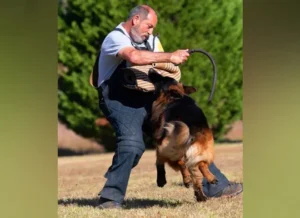 For owners, this means being clear about goals from the start. Some homes only need a confident companion that will bark when someone approaches. Others want a dog that can respond under real pressure. The more serious the role, the more important it becomes to have the right breeding, training plan, and support.
What Are The Qualities That Make GSDs Suitable For Protection Work
German Shepherds that do well in protection work usually share a certain type of mindset and stability that shows up in how they handle daily life. Here are some of the qualities that often stand out in dogs that truly fit this role.
Confidence In Protection Work
Confidence sits at the center of a good protection dog. A confident German Shepherd can look at a situation, process what is happening, and respond without panic. It does not startle easily, and when something surprising occurs, it recovers quickly instead of remaining unsettled.
This level of confidence keeps behavior more predictable. A dog that trusts its own judgment and trusts its handler is less likely to react wildly or make poor choices when stress appears.
Nerve Strength In Real Situations
Nerve strength is just as important as confidence. A suitable protection prospect can handle noise, crowds, and sudden movement without shutting down or becoming frantic. They can stay focused on the handler even when the environment is busy, loud, or confusing.
This steadiness allows the dog to think rather than simply react. In real situations, that difference separates a reliable guardian from a dog that might misread normal activity as a threat.
Responsiveness In Training & Real Life
Responsiveness shows in how quickly and cleanly a German Shepherd follows known commands, even when the situation feels exciting or uncertain. A responsive dog listens the first time, adjusts its behavior without arguing, and treats cues as a clear signal to change what it is doing.
This quality matters in protection work because it keeps control in the hands of the person handling the dog. A responsive GSD can shift from alert to relaxed, from movement to stillness, or from engagement to disengagement as soon as it is asked.
When strong responsiveness is paired with confidence and solid nerves, the result is a dog that can use its natural strength in a controlled way. That combination makes protection work safer and easier to manage in real life.
How Physical Structure Helps German Shepherds Work As Effective Guardians
Protection work puts steady, physical demands on a dog’s body. The way a German Shepherd is built affects how easily it can move, keep its balance, and stay sound over time. The points below show how different parts of the structure support GSDs in their protection work.
| Structural Factor | What It Is | Why It Matters For Protection Work |
| Athletic Build | An overall frame that is strong, coordinated, and not overly heavy | Helps the dog move quickly, turn sharply, and stay balanced under pressure |
| Balanced Structure & Topline | Even proportions with a solid, supportive back and rear | Allows the dog to push off with power, land safely, and recover footing without strain |
| Strong Muscle Development | Well-developed muscles through the shoulders, back, and hindquarters | Provides strength for jumping, driving forward, and controlled movement |
| Good Feet & Tight Pasterns | Firm, well-shaped feet and supportive lower joints | Help absorb impact over time instead of passing shock straight into the limbs |
| Healthy Joints | Sound hips, elbows, and spine supported by good genetics and care | Improve long-term reliability and reduce the risk of pain or early breakdown |
| Fit, Lean Body Condition | Proper weight without extra fat, supported by sensible exercise | Makes it easier to handle training, sudden movement, and age-related changes |
When structure and daily care match the workload, a protection-trained German Shepherd is more likely to stay active, comfortable, and reliable for years.
How Training Shapes A Dependable German Shepherd Protection Dog
Training is what turns natural strength and drive into safe, usable behavior. Even a well-bred German Shepherd needs clear guidance to understand how to act in real life, both during work and at home. Here are some of the ways training shapes a dependable protection dog.
Turning Natural Drive Into Control
A strong German Shepherd often comes with plenty of energy and instinct. Without training, that energy can show up as pulling, barking, or reacting to every small change. Structured training channels into clear tasks, so the dog learns that effort belongs in specific behaviors instead of scattered reactions. Over time, the dog starts to use its strength in a focused way rather than pushing against the handler or the environment.
Teaching Dogs To Look For Direction
A dependable protection dog does not make every decision on its own. Through steady practice, the German Shepherd learns that cues from the handler matter more than impulse. They begin to pause, check in, and wait for direction when something changes. This habit becomes especially important under pressure, because it keeps control with the person holding the leash and reduces the chance of overreaction.
Separating Work From Everyday Life
Good training also helps the dog understand when it is working and when it is simply living with the family. A trained German Shepherd learns that not every sound or visitor is its responsibility. It can relax in the home, walk calmly in public, and still respond when asked.
A well-trained protection dog German Shepherd is easier to guide, safer to live with, and more reliable when it matters. When training stays clear and consistent, the dog’s natural strength becomes something you can direct with confidence instead of being a concern.
Daily Exercise & Mental Work A Protection Dog Needs To Stay Balanced
A German Shepherd bred for protection stays more stable when both its body and mind have steady, predictable outlets. Here are practical ways to give a protection dog enough activity without pushing it into constant high-intensity work.
- Daily walks at a comfortable pace to keep joints moving and muscles strong.
- Controlled off-leash time in secure areas so your GSD can stretch out and move freely.
- Structured play such as fetch or tug with clear start and stop cues.
- Short obedience refreshers that keep core commands sharp and reinforce listening.
- Simple scent or search games that let the dog use its nose in a focused way.
- A predictable daily routine so the dog knows when to exercise, train, and rest.
When these habits stay consistent, a protection GSD is more likely to stay calm, clear-headed, and easier to live with in everyday life.
How Mittelwest German Shepherds Matches Protection Dogs With The Right Families
Mittelwest German Shepherds in Wonder Lake, Illinois, raises dogs with stable temperament, clear thinking, and sound structure. Puppies grow up with steady routines and calm exposure to new places, people, and situations. And this kind of start helps them become confident dogs that can handle pressure without losing focus.
New owners receive clear guidance on routine, feeding, exercise, and basic training so they are not left guessing once the dog comes home. That support helps families settle into daily life with their dog and keep its protective ability in balance with calm behavior in the house. With this kind of help, a well-matched German Shepherd is more likely to grow into a steady guardian and a comfortable part of family life.

Julie Martinez is a German Shepherd breeder and the owner of Mittelwest German Shepherds in Wonder Lake, Illinois. She breeds German Shepherd Dogs under the “vom Mittelwest” kennel name and is listed as a breeder on the AKC Marketplace. Through her breeding program, Julie focuses on German-bred bloodlines and works with owners who value structure, temperament, and real-world working ability. She is also involved in local working-dog training through the Wonder Lake Schutzhund Club, where Mittelwest supports hands-on development such as tracking and club training.