Short Answer:
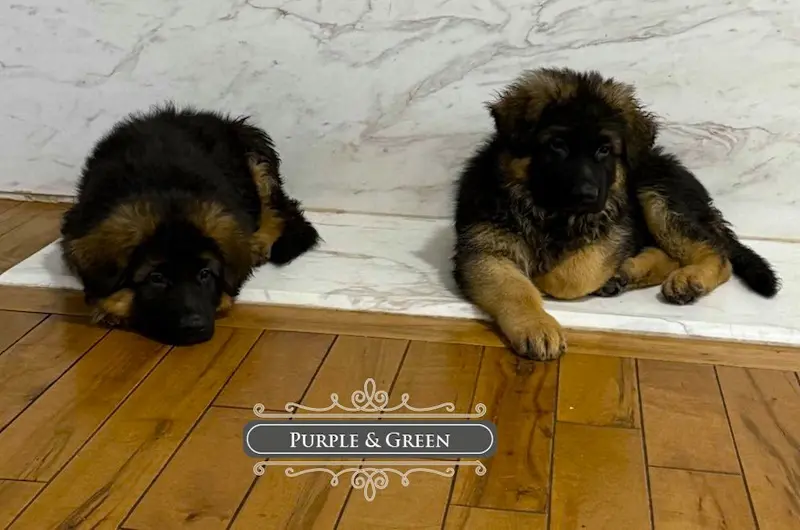
Yes, German Shepherd puppies commonly have paws that look oversized compared with their bodies. This is especially noticeable during the first several months, when the legs and feet may appear to develop faster than the chest and muscle mass.
Large looking German Shepherd paws are usually part of normal puppy growth. They reflect the proportions of a developing large breed dog, but they cannot accurately predict adult height or weight. Genetics, parent structure, sex, nutrition, health, and breeding line provide better clues.
Why German Shepherd Puppy Paws Can Look So Oversized
A young German Shepherd rarely grows in perfectly even proportions. At one stage, the legs may look unusually long. Later, the chest deepens and the body fills out. The ears, tail, paws, and limbs can each appear out of balance during different growth phases.
Feet & Limbs Develop Before The Body Fully Fills Out
During early growth, the feet and lower legs may look substantial while the shoulders, chest, and hindquarters are still gaining muscle. This creates the familiar “all paws and legs” appearance that many German Shepherd owners notice.
Coat can exaggerate the effect. Hair around the toes adds visual volume, particularly in long coat puppies. As the body gains adult proportions, the same German Shepherd paw usually looks more balanced.
Growth Plates Keep The Young Skeleton Changing For Months
Puppy bones lengthen through growth plates, which are areas of softer cartilage near the ends of developing bones. These areas gradually close and harden as skeletal growth finishes. Until then, the legs and joints remain part of a changing juvenile frame.
Large breed dogs generally mature more slowly than small breeds. Many reach adult size between 12 and 18 months, while muscular development may continue afterward. This longer timeline helps explain why temporary disproportions may remain visible beyond early puppyhood.
Do Big Paws Mean A German Shepherd Will Become Huge?
Not reliably. Paw size may show that a puppy still has considerable growth ahead, but it cannot reveal final height or weight. Veterinary reviewed guidance specifically notes that oversized paws and ears are not dependable predictors of adult size.
Two puppies can have similarly large feet at ten weeks and mature into adults with different frames. Coat length, toe shape, bone thickness, age, and camera angle also affect how large the paws appear.
Paw Size Shows Breed Type, Not An Adult Measurement
The official German Shepherd breed standard calls for males to stand 24 to 26 inches at the shoulder and females to stand 22 to 24 inches. A puppy’s paws belong to that overall structure, but no accepted formula converts paw width into adult height.
Puppies of different ages, sexes, coat types, and bloodlines can look very different while developing normally. Online photo comparisons therefore offer little certainty about eventual size.
The Parents Offer A Better Guide To Expected Adult Size
The sire and dam provide more useful context. Their height, weight, bone, proportions, and family history help establish a realistic range for the litter.
The puppy’s genotype, meaning its inherited genetic makeup, creates the foundation for its growth. The parents’ phenotype, meaning their observable physical traits, shows how that genetic potential appeared in their bodies.
A responsible breeder can explain whether a pairing tends to produce heavier bone, a moderate frame, a particular coat type, or noticeable differences between males and females. That information is more useful than a close up photograph of one paw.
What Determines A German Shepherd’s Adult Size?
Adult size develops from several connected factors. No single puppy feature should be treated as a guarantee.
Genetics, Parent Traits, & Breeding Lines Set The Frame
Genetics place the strongest boundaries around expected height, bone, proportions, and overall build. Studying several generations provides a clearer picture than looking at only one parent. Consistency across a pedigree helps a breeder discuss likely adult structure with greater confidence.
Breeding lines can also influence substance and body outline. Bigger does not automatically mean healthier or closer to the breed standard. Balanced structure, comfortable movement, stable temperament, and health deserve greater priority.
Sex Influences Height, Weight, & Overall Body Substance
Male German Shepherds are generally taller and more substantial than females, as reflected in the breed standard’s separate height ranges. Sex provides a useful starting point for estimating adult size, although individual dogs still vary.
A larger female and a moderately built male may overlap in height or weight. The physical history of the puppy’s family remains more informative than assumptions based on sex alone.
Nutrition & Health Shape How Healthy Growth Progresses
Nutrition helps a puppy reach its inherited potential, but extra food will not safely create a larger adult. Excess calories can add weight faster than the developing skeleton should carry.
Large breed puppy diets support controlled growth and appropriate mineral balance. Excess calcium may contribute to developmental abnormalities, so supplements should not be added unless a veterinarian recommends them.
Parasites, illness, digestive problems, injury, and orthopedic conditions can also affect development. Veterinary exams, suitable exercise, lean body condition, and correctly formulated food provide a safer foundation than trying to accelerate growth.
How Can You Tell Whether Your Puppy Is Growing Normally?
A healthy growth pattern provides more insight than one measurement. Consider the puppy’s appetite, energy, weight trend, movement, body condition, coat, and symmetry.
Track The Growth Trend Instead Of Measuring One Paw
Record the puppy’s weight at consistent intervals and discuss the pattern during veterinary visits. The goal is steady development rather than reaching a particular number quickly.
Growth charts can identify unusual changes, but they should be considered alongside the puppy’s age, sex, parents, and body condition. A single chart cannot account for every healthy difference between German Shepherd bloodlines.
When viewing available German Shepherd puppies, ask whether the breeder maintains weight, health, deworming, and vaccination records. These details reveal considerably more than which puppy has the biggest feet.
Know When A Paw Or Leg Change Deserves A Vet Exam
Large paws on both sides are commonly normal. Contact a veterinarian if one paw or joint suddenly becomes larger than the other or if you notice swelling, heat, pain, limping, paw dragging, an unusual stance, or reluctance to play.
German Shepherds are among the breeds commonly affected by panosteitis, a painful bone condition seen in young, rapidly growing dogs. Persistent discomfort should not be dismissed as an ordinary growth spurt.
What Should Buyers Check Before Choosing A Puppy?
Paw size should sit near the bottom of the decision list. Prospective owners need information that speaks directly to health, temperament, structure, and suitability for their household.
Ask For Health Records, Pedigrees, & Parent Information
Review pedigrees, registration information, relevant health testing, vaccination and deworming records, and the breeder’s written health guarantee. The terms should clearly explain coverage, duration, and buyer responsibilities.
Ask to see the parents when possible. When that is not possible, request current photographs, measurements, health documentation, and temperament information. The breeder should explain the purpose of the pairing and the traits it was expected to produce.
Look At Temperament & Structure Beyond The Size Of The Paws
Observe how the puppy moves, responds to handling, interacts with people, and recovers from new experiences. Look for balanced limbs, comfortable movement, clean eyes, healthy skin and coat, and an alert but manageable temperament.
The puppy should fit your household, activity level, training plans, and experience. A family companion may need a different temperament and energy level than a dog selected for sport, conformation, or working activities.
Choose A Puppy With Clear Expectations About Adult Growth
Big paws are normal in many German Shepherd puppies, but they cannot promise a huge adult dog. Parent structure, pedigree, health, sex, nutrition, and a consistent breeding program provide a much clearer picture.
Mittelwest German Shepherds welcomes prospective owners to discuss current litters, parent traits, health records, temperament, and expected development at our Wonder Lake, Illinois facility. Contact us to find a puppy selected for qualities that will remain important throughout its life.
Julie Martinez is a German Shepherd breeder and the owner of Mittelwest German Shepherds in Wonder Lake, Illinois. She breeds German Shepherd Dogs under the “vom Mittelwest” kennel name and is listed as a breeder on the AKC Marketplace. Through her breeding program, Julie focuses on German-bred bloodlines and works with owners who value structure, temperament, and real-world working ability. She is also involved in local working-dog training through the Wonder Lake Schutzhund Club, where Mittelwest supports hands-on development such as tracking and club training.